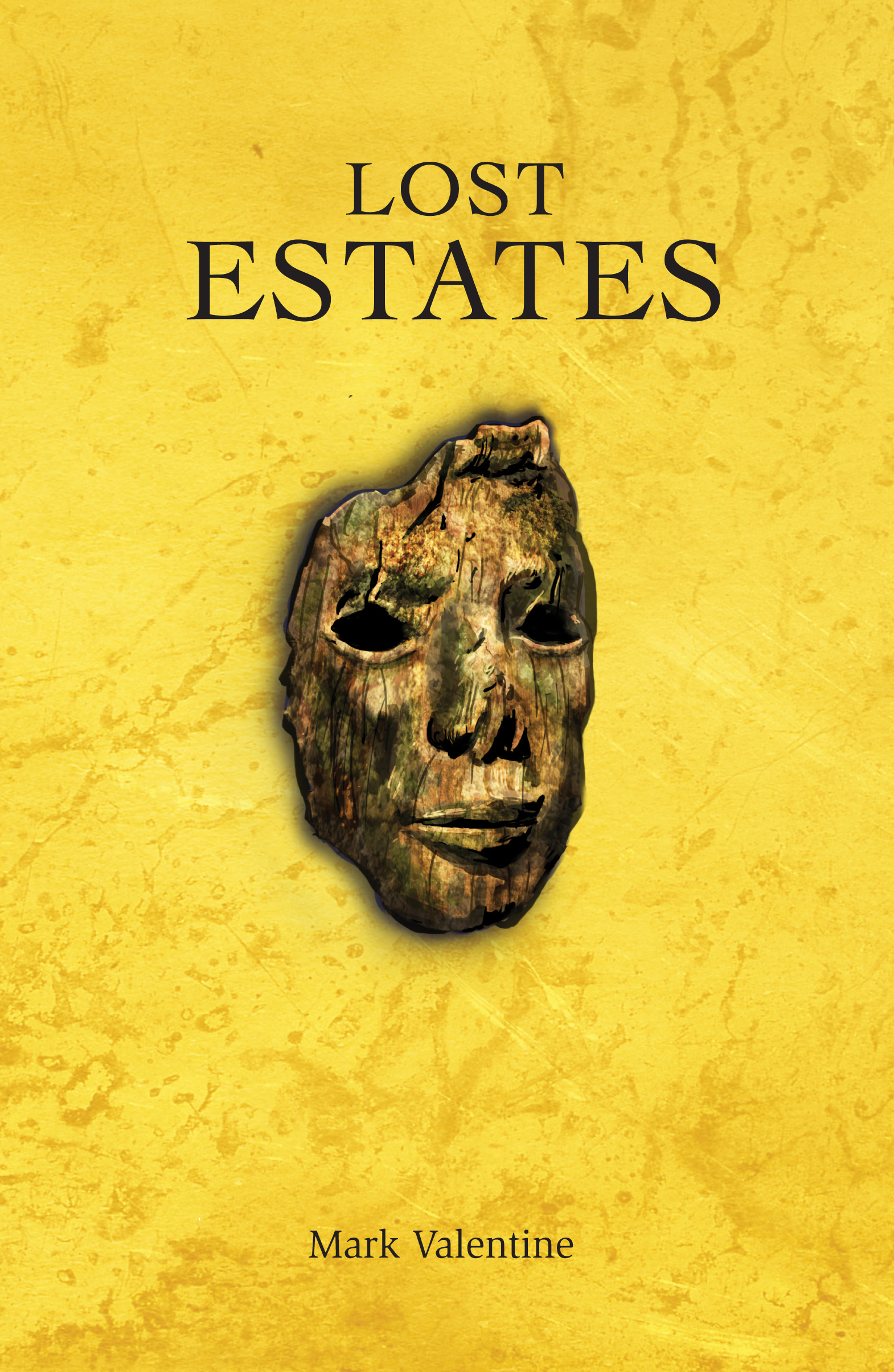
Mark Valentine’s third book with Swan River Press takes a different tack to the previous two collections, Selected Stories and Seventeen Stories, which focused on middle Europe between the wars. Lost Estates gathers stories by Valentine that share in common various aspects of folk horror, a genre that has a long and honourable tradition in England, and he manages very successfully to bring fresh perspectives to that tradition.
Perhaps the best pieces in this collection are also the longest, ‘A Chess Game at Michaelmas’ and ‘The Fifth Moon’, by virtue of the fact that there is more room for setting the scene and building tension, something Valentine excels at.
In ‘A Chess Game at Michaelmas’, a researcher into local variations of the custom of the peppercorn rent visits a crumbling Georgian manor in the English countryside to interview the current owner about the so-called rent on the property that was set by the King in the distant past. A peppercorn rent is a nominal annual fee or obligation that essentially hands the property over to the occupant for almost nothing. Of course, in this instance the fee or obligation, which comes due while the researcher is visiting the manor, turns out to be far more than almost nothing.
‘The Fifth Moon’ is an absolutely fascinating look at the loss of the amassed treasure of King John, an event that took place on October 12th, 1216, when a train of wagons containing a vast array of jewels and cash and other valuables was taken by a sudden flood in a marshy estuary called The Wash as it attempted to make a crossing from King’s Lynn to Sutton.
A writer and photographer visit the area in order to gather material and photos for a book to be published as part of a series called “Mysteries of History”. As they investigate the circumstances leading up the event and try to determine the exact location of the wagon train when it was swept away, a difficult task given that much of the land in the area has been reclaimed from the estuary in the last hundred years or so, they interview local self-proclaimed experts on what they think happened and where and we begin to suspect that what has been traditionally regarded as treasure may have been something of a more sinister nature.
Other standout stories in this collection include ‘Worse Things Than Serpents’, where a man picks up an unpriced book in an abandoned ramshackle bookshop in the wilds of Norfolk and leaves a promissory note to the effect that he will pay whatever price is due, ‘Fortunes Told: Fresh Samphire’, a by turns surreally-written piece wherein a man ponders the disappearance of an acquaintance from his cottage by the sea and its possible or quasi-sequel ‘The Readers of the Sands’, and ‘The Seventh Card’, about a man trying to determine the identity of someone who keeps sending him strange and mysterious Christmas cards.
At all instances, Valentine paints a picture of a landscape redolent of mystery and linked via a thin veil to a heritage of ancient wisdom and arcane lore, even when the story takes place in a city, as in ‘And maybe the parakeet was correct’ and ‘The End of Alpha Street’. His sense of place is astonishingly well realised and many of the stories have at their heart a nugget of real history, which sent me off on my own personal quests for more information, as in, for example, ‘The House of Flame’, about public reaction to the death of Charles George Gordon in Khartoum in 1885 and the aforementioned ‘The Fifth Moon’.
Highly recommended.
Lost Estates by Mark Valentine (Swan River Press, hb, 201pp, €40.00)

 John Kenny
Discussion
Trackbacks/Pingbacks
Pingback: Reading the Signs | Swan River Press - May 10, 2024