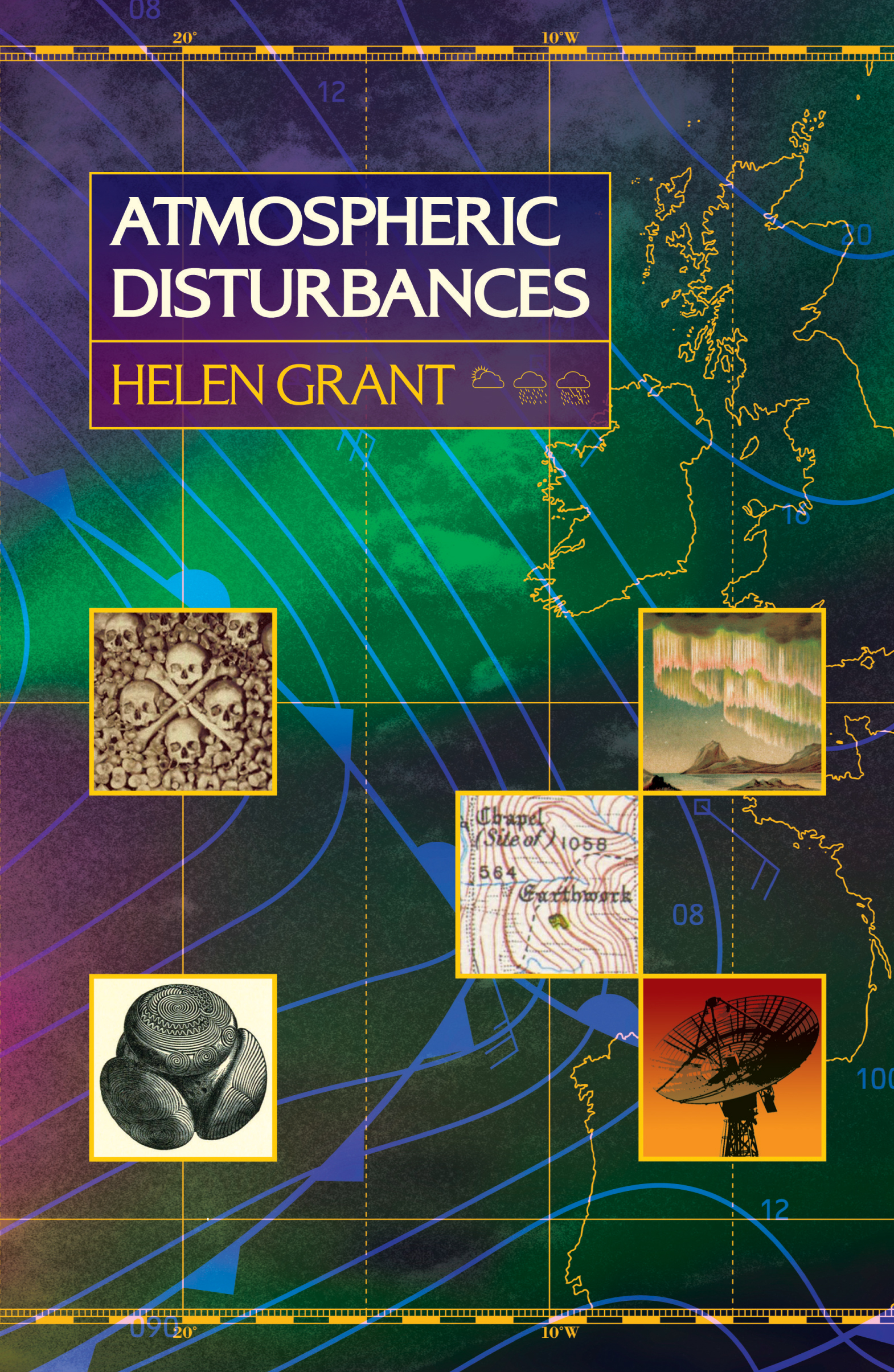
Helen Grant’s second collection from Swan River Press, following The Sea Change & Other Stories in 2013, explores a wide range of aspects of the uncanny to great effect.
In ‘Gold’, an expedition to a crumbling palace keep hidden along an isolated river bed in an unspecified hot desert country uncovers ancient treasure that proves to be the result of a terrible curse. ‘The Field Has Eyes, the Wood Has Ears’ takes as its inspiration the eponymous sketch by Hieronymus Bosch. As the main character views it in a Berlin art gallery prior to his departure for Edinburgh at the onset of the Covid-19 pandemic, we are drawn in by his interest in the drawing’s bizarre elements, an interest that transforms in the course of a fearful trip, and a steadily worsening migraine of epic proportions, into an overwhelming obsession that could threaten his very existence. And in ‘The Wynd’, an unscrupulous con artist, fresh from a scam gone wrong, chances upon an extremely narrow laneway that leads him to a magnificent abandoned church concealed in the heart of the city, and a set of strange stained glass windows that exact an awful price for his swindling ways.
It’s difficult to choose standout stories in this excellent collection, but if I had to pick just a couple that had a real impact on me, they would have to be those that open and close the book: ‘Mrs. Velderkaust’s Lease’ and the title story ‘Atmospheric Disturbances’. In the first story, an impoverished Ellen Velderkaust moves with her two young sons to a new neighbourhood in the aftermath of her husband’s death. The lease on the house she secures, at an unusually low rent, includes an outlandish clause, one that prohibits them from staying in the property on the 5th and 6th of December. Of course, events necessitate her disregarding the clause and the repercussions are truly grisly, the more so for being chillingly implied rather than graphically described.
The closing story, ‘Atmospheric Disturbances’, finds a man stuck on a remote island off the coast of Scotland in the aftermath of a possible nuclear attack on the mainland. He discovers the nearby military base mysteriously deserted with no way for him to contact potential survivors back home. The only connection he has to humanity anymore is via a radio that periodically comes to life with bursts of panicked exclamations that seem to be the last words uttered by a wide variety of people just before the catastrophe struck. What elevates this story to something really special is the genuine uncertainty evoked in the main character as he tries to come to terms with what has probably happened and salvage a metaphorical something from the wreckage.
Other stories of note include ‘Friday’, an elegantly and wittily told tale of spousal retribution that I’m surprised to see from the sources page has not been previously published, ‘Chesham’, in which a man clearing out the family home to prepare it for sale after the death of his parents discovers photographic evidence of a sibling he doesn’t remember having, and ‘The Edge of the World’, where Grant presents a fascinating alternate theory for the purpose of the small Neolithic stone balls called petrospheres that have been uncovered mainly in the most northerly parts of Scotland. The theory is so compelling that I wonder if it might actually have been a possibility.
However, despite highlighting certain stories here, I have to say that all of the stories in Atmospheric Disturbances are well worth your time and that this is one of the strongest single author collections of uncanny and supernatural tales I’ve read in a long time.
Atmospheric Disturbances by Helen Grant (Swan River Press, hb, 235pp, €40.00)

 John Kenny
Discussion
Trackbacks/Pingbacks
Pingback: Excavating at the Edges of the World | Swan River Press - September 11, 2024